
Opens in a new tab
A primer

The primary care orchestration & execution platform.

What it is

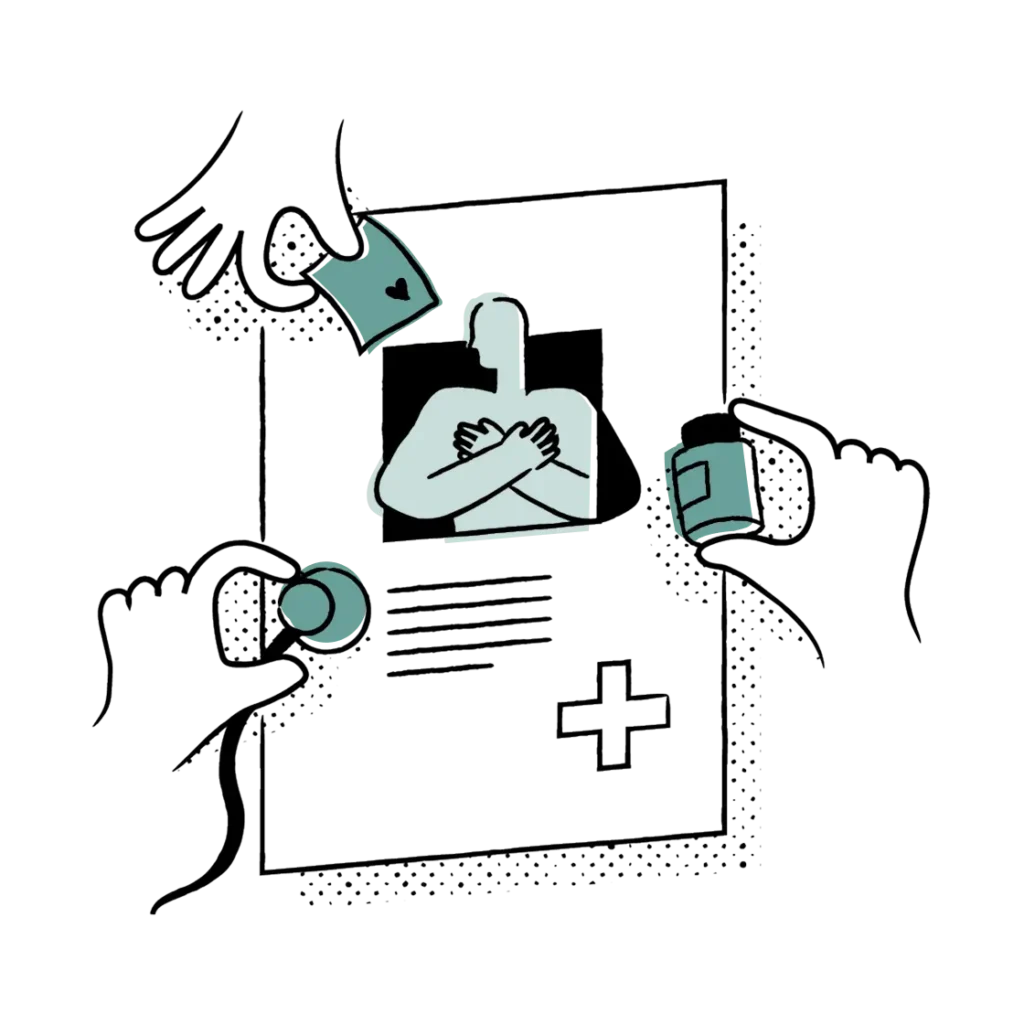
A Primary Care Orchestration & Execution Platform is a technology and operating layer that sits alongside existing clinical systems and continuously coordinates care for an attributed or defined patient population. It identifies which patients need attention, initiates and manages the work required to reach them, routes that work to the appropriate person or resource, and closes the loop back into the clinical record and the care team's workflow.

It does not replace the systems an organization already owns. It coordinates across them.

In practice it operates as an always-available member of the care team. It carries the identification, outreach, and follow-through that would otherwise consume clinical staff, scaling the reach of the team already in place instead of adding to it, and returning clinicians and licensed staff to the work that requires their training.
Defining characteristic 01

Continuity

Traditional primary care operates episodically. Care happens when a patient presents. An orchestration and execution platform operates continuously, managing the intervals between encounters where chronic conditions progress, care gaps persist, post-discharge risk concentrates, and patients disengage. It does this at population scale, without requiring proportional growth in staffing.
Defining characteristic 02

Breadth of scope

Orchestration and execution is not a single function performed well. It spans identification, outreach, engagement, escalation, documentation, coordination, and measurement, and it holds those functions together so that no step depends on a person remembering to perform it.
Defining characteristic 03

Configurability

No two panels are managed the same way. Protocols, escalation thresholds, outreach cadence, and the division of work across the team are configured to the local organization, so the platform engages each panel the way that care team has already designed its workflow rather than imposing a standard one.
A practical test

If a solution requires a person to notice something and then initiate the work, it is a tool. If it initiates the work, carries it through, and escalates only what requires human judgment, it is orchestration and execution.

Adjacent solutions

What it is most often confused with

Several established categories address components of the same underlying problem. Each solves something real. None of them, individually or in combination, constitutes orchestration or execution.
Solution category What it addresses What it leaves unaddressed
Population health analytics Identifies risk, stratifies populations, and reports performance. Surfaces who needs attention without executing the outreach, engagement, and follow-through that acting on the insight requires.
Patient engagement and outreach tools Delivers messages, reminders, and campaign-based communication. Communicates without clinical logic, escalation pathways, or closed-loop resolution of what the outreach uncovers.

The full reference covers seven adjacent categories, including telehealth, remote patient monitoring, ambient documentation, outsourced care management, and EHR-native population health modules.

The capability framework

Five domains, assessed together

Strength in one domain rarely compensates for a material gap in another. A platform that performs well clinically but cannot deploy into a resource constrained environment will not produce results.
  • 01

    Organizational Qualifications & Experience
    Who stands behind the platform

  • 02

    Clinical & Operational Capabilities
    The orchestration and execution engine

  • 03

    Technology & Interoperability
    The layer it runs on

  • 04

    Security, Privacy & Responsible AI
    What governs the whole platform

  • 05

    Implementation & Enablement
    How it reaches the ground

The complete framework sets out 72 capabilities across these five domains, each with a description of what distinguishes a credible platform.

Value drivers

What organizations pursue when they
evaluate this category

Access expansion without proportional hiring
Clinicians practicing at the top of their license
Continuity between encounters
Reliable transitions of care
Care gap and preventive service closure
Value-based care performance
Deployment flexibility across organizational maturity
Sustainability beyond initial funding
Adjacent solutions

What it is most often confused with

Written for health systems, provider networks, and state transformation programs building internal alignment on what this category should be expected to deliver.

  • All 72 capabilities across the five domains, with what distinguishes a credible platform in each
  • The full comparison against seven adjacent solution categories
  • The questions that tend to separate an orchestration and execution platform from a solution positioned as one
The reference is delivered by email immediately. We may follow up once to ask whether it was useful. You can opt out of any further contact at that point.

Meet Tom

Google reCaptcha: Invalid site key.