
Let’s be honest “AI will replace doctors” is quite a dramatic headline. It’s a bit like asking whether spreadsheets replaced CFOs. They didn’t, they just made it harder to fake a forecast with a yellow legal pad and a strong opinion. The reality is far less cinematic and far more interesting.
In healthcare, in the messy, overbooked, “why is my 9 am. already 20 minutes behind?” reality of care delivery, the real revolution isn’t about replacement. It’s about relationships. Between clinicians and algorithms. Between data and decisions. Between what machines can compute and what humans care about. The future is human plus AI. And that equation adds up to something more symbiotic than sci-fi.
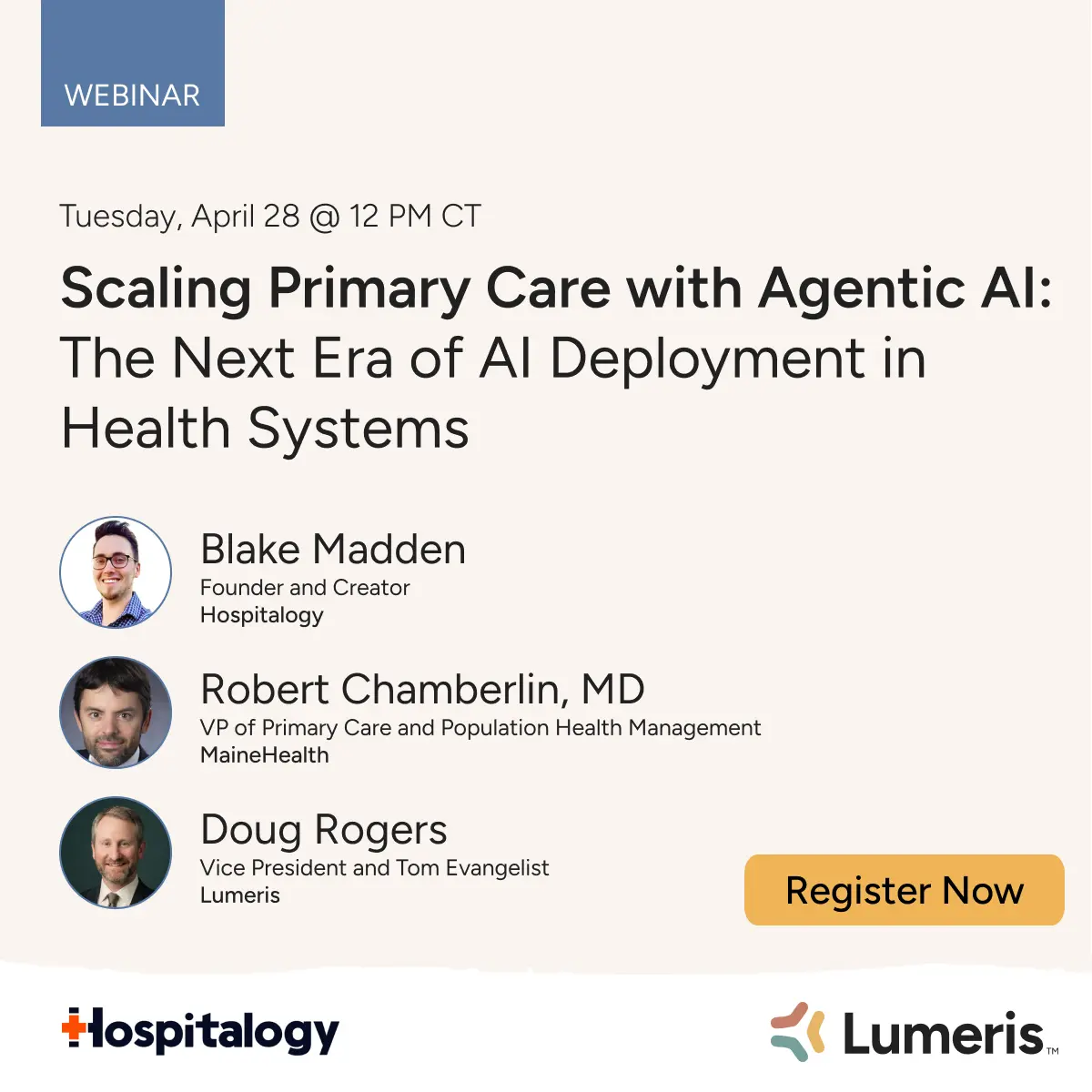
Tom™, our AI-powered Primary Care as a Service (PCaaS) platform, already behaves less like a passive analytics engine and more like a colleague who quietly handles the work 24/7. It monitors panels, follows established guardrails and guidelines to execute best next actions, coordinates outreach, and escalates when something looks off. But the magic isn’t that Tom acts; it’s how Tom fits into the human team.
From AI Coexistence to AI Collaboration
We’ve already seen the first act. AI reads X-rays. It drafts clinical notes. It reminds you when a patient might be overdue for a check-up. Useful, yes, but still a bit mechanical. What’s coming next is deeper integration, where human expertise and autonomous systems work together in real time, swapping signals like a well-rehearsed band.
Imagine a primary care ecosystem where AI systems anticipate care gaps, flag nuanced risks, and surface context not because they know more than clinicians, but because they see differently. The physician, meanwhile, brings interpretation, empathy, and nuance to the irreplaceable human parts of medicine. Together, the care teams and AI systems form a feedback loop that’s greater than the sum of its algorithms.

A normal Tuesday morning might look like this: while the clinician finishes an encounter, Tom has already cleaned up the panel, teed up chronic care outreach, flagged a few high-risk patients for same-week touchpoints, and drafted follow-up tasks for the team. No manual bottlenecks preventing autonomous tasks from being executed seamlessly, and within scope. Just a quiet sense that the day is oddly…manageable.
Designing for Care Delivery Symbiosis, Not Supervision
Too often, we talk about “AI oversight” as if the goal were to babysit technology that’s perpetually misbehaving. But what if we designed systems to collaborate naturally with humans, not to be micromanaged by them?
In a symbiotic healthcare model, both sides adapt. AI learns from human corrections, tone, and priorities. Clinicians, in turn, leverage AI’s strengths and stamina without surrendering judgment. One navigates while the other keeps everyone safe and comfortable.
On the surface, the care team doesn’t see a swarm of agents. They see a coherent workflow: a queue of prioritized tasks, pre-assembled lists of who needs what, and outreach that just…happened, without someone staying past 7 p.m. to click “send.” The choreography is invisible; the relief is not.
The AI Workflow Frontier
A truly symbiotic system doesn’t just “support” workflows; it redesigns them. The future clinical encounter could look less like filling out templates and more like a dynamic dialogue among patient, clinician, and AI assistant.
Picture this: as a patient speaks, the AI synthesizes real-time insights from medical history, and environmental data. By the time the conversation ends, a personalized care plan is already taking shape – evidence-based, human-approved, and ready for action. That’s the kind of workflow where everyone wins, and no one burns out.
The New Rules of Engagement
If we want human-AI collaboration to feel natural instead of nerve-wracking, we need more than technology and trust. We need operating principles, a social contract for how this all works in practice. Here are a few principles that are emerging in AI-native primary care environments:
1. No unreviewable decisions in high-risk care.
While all AI-driven decisions must remain reviewable from a governance perspective, high-risk actions require explicit human review for execution. Once a clinical or ethical threshold is reached, these high-stakes decisions must be over-rideable and clearly traceable to both the data and the clinicians responsible for them.
2. Humans own values; AI owns variance.
Clinicians define goals, trade-offs, and what “good” looks like in their population. AI hunts for outliers, risks, care gaps, and missed opportunities across millions of data points. It’s not there to decide what matters, only to make sure we don’t miss it.
3. Every AI action leaves a breadcrumb.
When Tom schedules an appointment, triggers outreach, or flags a concern, it leaves a clear, human-readable explanation. A short, defensible “because” that clinicians can glance at and either accept or reject without an existential crisis.
4. Clinicians can always say no, and the system learns from it.
Overrides are not treated as disobedience. They are treated as feedback. If clinicians keep rejecting the same type of suggestion, the system should adapt. In a healthy ecosystem, “no” is not the end of the conversation; it’s the tuning mechanism.
The Punchline: AI Enabled Care Is Still About People
The irony of AI in healthcare, is the more advanced the technology becomes, it actually depends on the human element to succeed – requiring care teams to evaluate the technology, depending on them to show compassion and use technology responsibly, and ultimately putting their trust in AI.
At Lumeris, we see this future not as fantasy but as a design challenge how to make technology empathetic enough to earn its place in the clinical circle of trust. In that vision, the best AI doesn’t just make care smarter; it makes it more human.
After all, the end goal isn’t to automate healthcare it’s to elevate it. And if that means AI plays second fiddle in the world’s most important duet, that’s a tune worth practicing.